
When the old ways stop working: reading disruption as a chaos cycle

Across therapy rooms, environmental organisations, and executive teams, professionals in demanding fields are reporting that approaches that used to work no longer land, and the systems they operate within feel less stable than they did even a few years ago. The old playbooks are not working as they used to. Strategies that once delivered results now meet resistance, exhaustion, or simply don't hold true anymore.
Many capable, experienced leaders are left wondering what is going on and how to respond.
Shamanic traditions have a name for what is underway. The changes that are occurring are part of what are called chaos cycles. These are recognised phases in the life of any living system, in which structures that have outlived their relevance or alignment to other patterns dissipate to make room for something new to take form. Just like each one of us, systems are born, develop, mature then die away, making room for the new to emerge.
What is a chaos cycle?

In shamanic understanding, disruption and breakdown are not failures to be corrected. They are a process and a necessary phase that living systems move through periodically. A forest requires fire to clear old growth and allow regeneration. A body moving through a fever is not simply fighting off an invader but reorganising its own internal state toward balance, with the heat and opportunities for renewal being part of that reorganisation. In both cases, the process feels uncomfortable, disordered, and chaotic. Yet, just like any aspect of life, death at some stage becomes a necessity. The death is not an ending but a transition and necessary part of life. The more we cling on to something that is in a natural stage of death, the more painful the transition becomes.
The same logic applies to human systems such as the life of an organisation, way of engaging in the world, or culture. It also applies to collective and outmoded concepts and worldviews, such as those about growth, control, hierarchy, and separation that have organised Western institutions for generations. Throughout history, aspects of human systems periodically require dissolution when the old is in poor alignment with wider change and before a coalescing around something more alive. Importantly, recognising what may seem like chaos as part of the process of reconfiguration and renewal changes how we might navigate within it.
Why the Chaos Cycles we are in now are different
Chaos cycles are usually discussed as something an individual, or a single organisation, moves through on its own. What is increasingly evident is that several systems — ecological, institutional, cultural — are moving through disruption simultaneously locally and globally, with some faster or slower than others. They are occurring across multiple systems at once, at collective levels, and at a depth and extent very few of us have direct experience of navigating.
In short, we are in a major transformational change, with different cycles affecting and being affected by others. Some within ourselves and others within our larger whole.

This is why a particular kind of fatigue is showing up across so many fields and professions at once. Therapists are seeing the wider shifts occurring in the collective show up in the strained nervous systems of individuals in the therapy room. Environmental practitioners are working with ecological systems that are actively collapsing rather than just gradually declining. People in leadership roles across all sorts of public and private sectors are finding that approaches to leadership developed for a more stable world are at best ineffective, and at worst are creating more friction. All of these are local expressions of the same underlying shift occurring globally and as the old dies to create space for the emergence of the new.
When you face a chaos cycle, ask a different set of questions
As a leader or steward in these cycles of chaos, a natural question arises about how you might act more effectively? What should you be doing during a chaos cycle where an ending is happening? What should you be doing at the end of your world as you know it?
There are no simple answers. But when you sense something is unstable, it is worth asking different kinds of questions. Most of your professional training was likely directed to learning how to solve the immediate problem. This involved answering questions like: how do I get this back under control? What broke, and how do I fix it before it gets worse? Whose responsibility is it to correct this? Answering these questions isn't wrong. Yet this approach is for problems where the system is fundamentally sound rather than for a system in the process of ending.
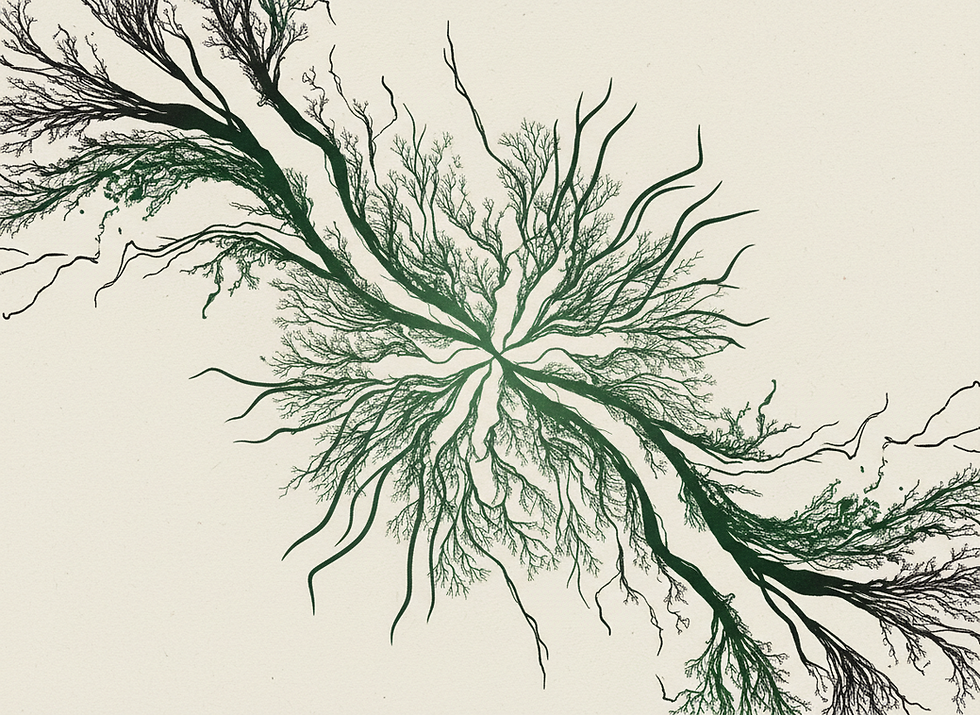
So, if you sense you are in a chaos cycle, try asking a different set of questions: What is trying to end here? What has this pattern, relationship, or structure already stopped being able to do? What would it mean to let this finish, rather than intervening to keep it going? What wants to die? What must die for renewal to occur?
Asking these questions is uncomfortable because it does not assume the goal is to restore what was there before. Instead, it requires finding out what is happening, what needs to end, be born, or be renewed and how you can work with the natural cycle of change rather than against it.
What should you do when you face major change?
The next time you are facing a challenge, crisis, breakdown, or significant change: Stop, step back, and ask what you sense is happening. Then consider the following:
1. Ask yourself if you are in a chaos cycle. This involves reflecting on whether the challenge you are facing needs to be fixed, or whether the change is a natural part of the cycle of death and renewal. Does it feel like applying more effort will lead to a resolution or is this a sign that something needs to dissipate so something different can come into being?
2. If you are in a chaos cycle, ask what this might mean for the way you engage. Rather than asking "how do I fix this and get back to how things were," sit with and explore "what is trying to end here, what would it mean to let it finish, and what opportunities and more wholesome directions open up when I let it go?" In doing so, explore how you can work more with the natural flow of change rather than against the grain. What do you need to be honest about to allow the change that is needed to occur?
3. Let the answers guide how you act and resist the urge to control. It is difficult to genuinely hold a possible ending and stay steady through dissolution. It might require difficult actions, such as withdrawing support from something or someone that is no longer serving its purpose rather than trying to prop it up. This will in turn require determination and courage to resist the call for immediacy and familiar action and skill to work with fear of change. Critical question to then ask yourself is: "what do I need to do for myself, to be able to hold this difficult period?” or “where can I muster my own resources or help from others?”
Overall, chaos cycles are not easy to work with, and there is no single pathway or easy route to navigating them. Learning to recognise when you are in one is a good start as it helps you avoid reaching straight for some way to an attempted repair.


Comments